

Early Season Vineyard Tasks
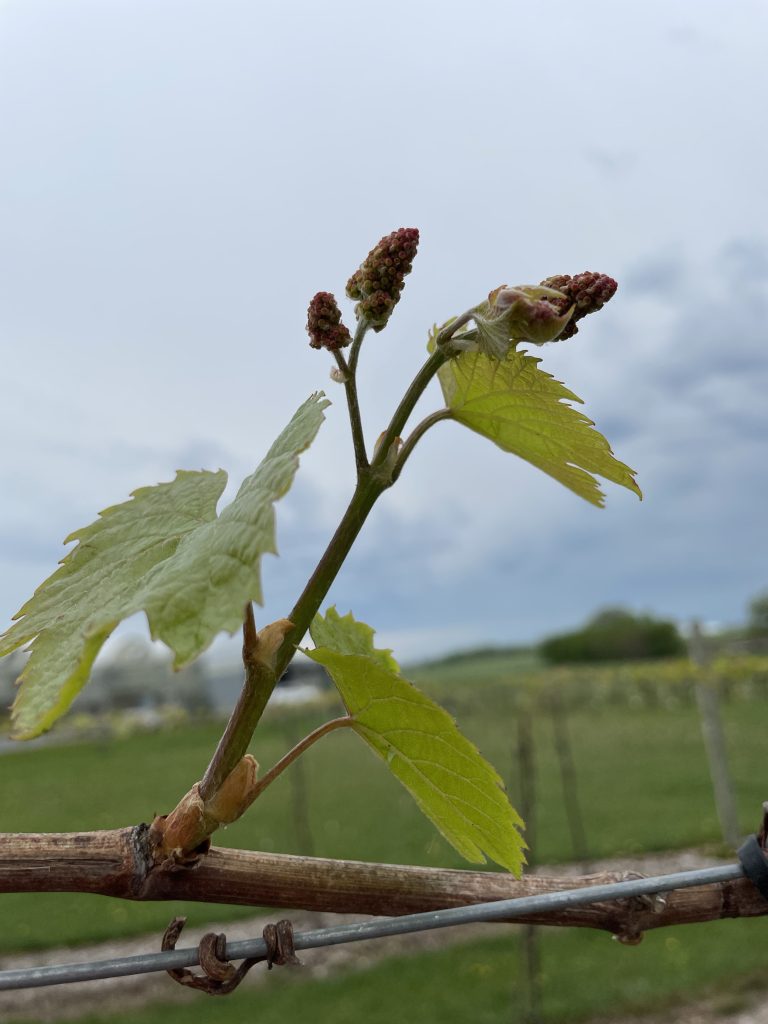
After last week’s extremely warm weather, grapevines got enough heat to break bud and we are already seeing 2 to 3 inches of growth on the new shoots. The weather has been cooler this past week and next week maximum temperatures will be in the mid-sixties and seventies. I would anticipate that we will be in bloom in southern Wisconsin in the next 10 to 14 days. To make sure we start this new growing cycle in the best possible way, here are a couple of tasks to get done during the early season.
Nutrient management: The main nutrients to consider in early season are Nitrogen (N), Boron (B), and Zinc (Zn). Last year’s petiole analysis and yield records are the base information needed to develop this season’s nutrient management. The sufficient range for N in petiole samples is between 0.9-1.3% and for every ton of grapes harvested 3.6 lb of N/acre are removed (e.g., if you produced 4 tons/acre of grapes then the recommendation would be to fertilize 14.5 lb of N/acre). The amount of N fertilizer will depend on the type of soil you have. Soils with high organic matter (2%) will release nitrogen from mineralization and might not need to be fertilized, while sandy soils with low levels of organic matter (<1%) will probably need to be fertilize every year. Check your petiole analysis results, your yield records, and your notes on vine growth from last year to determine if you need to fertilize with N.
Boron (B) is a key element for fruit set and shoot growth. B can be low in vineyards with sandy soils, high soil pH (7.5), and low organic matter (<1%). Soil applications of 2 to 4 lb of B/ac or foliar application of 0.4 lb B/100 gal in spring when shoots are at least 3 inches long can help alleviate deficiencies.
Zinc is an important nutrient for berry development and can be low in sandy soils with high pH (>7.5) and low organic matter (1%) The sufficient range for Zn in petiole samples is 30 to 50 ppm. Zn soil applications of 10 lb Zn/ac of Zinc sulfate or foliar application of Zn chelate can be done 2 weeks before bloom to alleviate deficiencies.
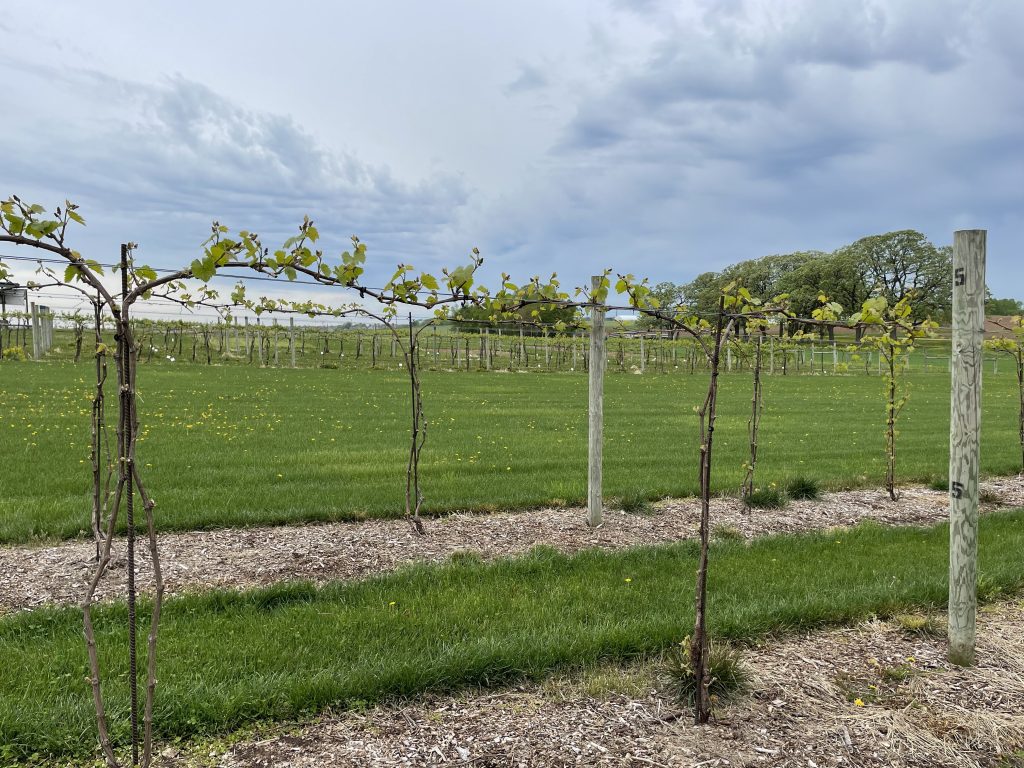
Shoot thinning and leaf removal: To ensure an open canopy with adequate airflow that will help reduce disease pressure and good spray penetration, shoot thinning of overcrowded cordons should be done when shoots are about 5 to 10 inches long. In cold climate grapes, we often have many basal shoots produced from non count buds (these are buds that we don’t consider when pruning) so we can end up with more shoots that what was planned when dormant pruning was done. You can selectively eliminate some of the basal shoot that have no clusters to open up the canopy. Leaf removal should be done when berries have achieved the pea size stage by removing 2 to 3 leaves around the cluster zone. Research has shown that leaf removal in cold climate grapes reduces total acidity (TA), increase phenolic compounds and anthocyanin which improves wine color, and reduces green notes (methoxypyrazines) in white wines.
This article was posted in Grapes and tagged Amaya Atucha, early season, Grapes, leaf removal, Nutrient management, shoot thinning, vineyard, vineyard tasks.